
What Is a Value Added Reseller (VAR)? A Complete Guide for the IT Channel
KEY TAKEAWAYS
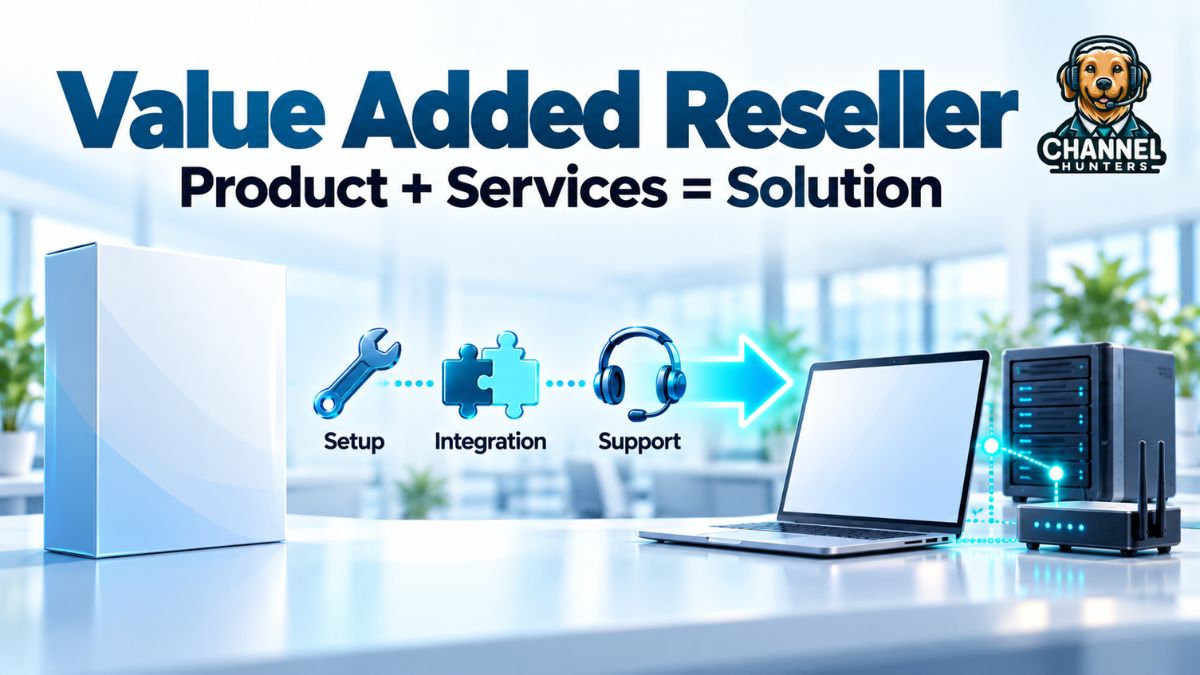
- A value added reseller (VAR) resells another company’s technology and adds services on top, like setup, integration, training and support.
- VARs usually make money two ways: a margin on the products they sell and fees for the services they add.
- A VAR is different from a plain reseller, a distributor and an MSP, even though many companies blend these models.
- Many VARs rely on vendor programs and referrals for new business, which can make their pipeline uneven.
- A steadier pipeline needs a source the VAR controls: outbound conversations with IT decision makers before a project starts.
A value added reseller (VAR) is a company that buys technology products from vendors or distributors and resells them to businesses with extra services added. Those services can include consulting, installation, configuration, integration with existing systems, training and ongoing support. The customer gets a working solution, not just a box or a license.
TechTarget describes it the same way: a VAR resells products and adds value beyond the original order, such as installation, consulting and training.
That “value added” part is the whole point. Anyone can resell a product. A VAR earns its place by making the product work for a specific customer.
What Does a VAR Do?
A VAR sits between the companies that make technology and the businesses that use it. A typical VAR:
- Helps the customer choose the right product for their needs
- Buys the product from the vendor or a distributor
- Installs, configures and connects it to the customer’s other systems
- Trains the customer’s team to use it
- Supports it after the sale, sometimes under an ongoing contract
For example, a business that needs new firewalls doesn’t just want hardware delivered. It wants someone to pick the right model, set it up, connect it to the network and make sure it works. That’s what a VAR does.
How Do Value Added Resellers Make Money?
VARs typically earn revenue in a few ways:
- Product margin. The difference between what the VAR pays the vendor or distributor and what it charges the customer.
- Service fees. Charges for consulting, installation, integration, training and project work.
- Ongoing support. Recurring fees for maintenance and support after the project ends.
- Vendor programs. Some vendors offer partners incentives or discounts based on sales or certification level. Terms vary by vendor.
Product margins can be thin, so services often matter more over time, both for profit and for the long-term customer relationship.
Types of Value Added Resellers Model
VARs often specialize by the kind of technology they sell:
- Hardware and network VARs resell servers, switches, firewalls and end-user devices, and handle installation and setup (for example, a firewall refresh for a 50-person office).
- Software VARs resell and implement business software, such as accounting, ERP or CRM systems, often with customization and training (for example, rolling out accounting software for a growing business).
- Cloud VARs resell cloud licenses and subscriptions, and handle migration and administration (for example, moving a 30-person team to Microsoft 365).
- Security VARs resell security products and help customers deploy and manage them (for example, deploying endpoint protection across an office).
Many VARs cover more than one of these, especially as customers ask for a single partner to handle more of their technology.
VAR vs Reseller vs Distributor vs MSP
These terms get mixed up often. Here’s how they compare:
| What they do | Who they sell to | Added services | How they usually earn | |
|---|---|---|---|---|
| Reseller | Resells products as they are | Businesses or consumers | Few or none | Product margin |
| Value added reseller (VAR) | Resells products plus services that make them work | Businesses | Consulting, setup, integration, training, support | Product margin plus service fees |
| Distributor | Buys from vendors in volume and supplies resellers | Resellers and VARs | Logistics, credit, partner support | Volume margin |
| Managed service provider (MSP) | Manages a client’s IT on an ongoing basis | Businesses | Help desk, monitoring, patching, backups | Recurring monthly fees |
The lines blur in practice. Many VARs now offer managed services, and many MSPs resell products. If you’re working out where security providers fit, our guide MSP vs MSSP: Definition, Requirements and How to Know Which One Are You? breaks it down.
Why Do Businesses Buy Through a VAR?
If a business can buy directly from a vendor, why use a VAR? A few reasons:
- Expertise. A VAR knows how the product works in real environments and how to avoid setup mistakes.
- One point of contact. The VAR handles the product, the setup and the support, so the customer doesn’t juggle several companies.
- Fit. A good VAR recommends what the customer actually needs instead of the biggest package.
- Support after the sale. When something goes wrong, the customer calls someone who already knows their setup.
For a small or mid-sized business without a large IT team, that combination often matters more than a slightly lower product price.
How VARs Find New Clients
This is where many VARs struggle. Their work depends on projects, and projects come and go. Many VARs find new business through a few familiar sources.
Vendor and distributor relationships
Some vendors pass opportunities to their partners, and distributors can help with programs and introductions. These relationships are valuable, but the VAR doesn’t control how many opportunities show up or when.
Referrals from current clients
Happy customers recommend VARs to peers. Referrals tend to close well, but they’re hard to predict. A busy quarter can be followed by a quiet one.
Events and trade shows
Industry events create conversations, but they happen a few times a year, and the follow-up decides whether any of those conversations turn into projects.
Outbound outreach to IT decision makers
The one source a VAR fully controls is its own outreach: reaching out to businesses that fit its specialty before they start shopping. This is what can turn an uneven pipeline into a steadier one.
Outbound works best for VARs when it’s timed to the moments that create projects, such as:
- Hardware reaching the end of its support life
- Software licenses or contracts coming up for renewal
- A business opening a new office or adding staff
- A move to the cloud or a change in core business software
- New security or compliance requirements from customers or insurers
A quick call that asks about these moments, without pitching a product, can uncover a project months before the business would have gone looking.
Want someone asking about these moments every week? Let’s Hunt!
A simple way to open the call
For a VAR, a good first question might be: “When your servers or firewalls come up for replacement, who usually decides what you buy next?” It’s easy to answer, it shows you understand their world and it tells you two things at once: whether a project is coming and who owns the decision. From there, the conversation can move to timing, not product features.
What a Qualified VAR Appointment Looks Like
Booking meetings is only useful if the meetings are worth having. For a VAR, a qualified appointment usually means:
- The right person. Someone who makes or strongly influences technology decisions, such as an IT manager, the owner or a finance leader.
- A real project or need. An upcoming refresh, renewal, expansion or problem, not general curiosity.
- A reasonable timeline. The project is likely to happen in a window that matters to your pipeline.
- A fit with what you sell. The need matches the vendors and services you specialize in.
When outreach is built around those four points, sales teams spend their time with prospects who can actually move forward.
How Channel Hunters Helps VARs Build a Steadier Pipeline
Channel Hunters books qualified appointments with IT decision makers for VARs, MSPs, MSSPs and technology vendors. Each client gets a dedicated Hunter who focuses on reaching decision makers, not gatekeepers.
To learn more about how outsourced outreach works, read Outsource Appointment Setting: An MSP Decision Guide. The same decision applies to VAR sales teams. You can also see how to build a more consistent MSP pipeline.
Frequently Asked Questions
What is a VAR in business?
VAR stands for value added reseller. It’s a company that resells technology products from vendors and adds services such as setup, integration, training and support so the product works for the customer.
What is a VAR partner?
A VAR partner is a value added reseller that has a formal relationship with a vendor. Vendors often run partner programs with training, pricing and support for the VARs that sell their products.
Are value added resellers profitable?
They can be. VARs usually earn a margin on the products they resell plus fees for the services they add, such as installation, integration and support. Many also earn recurring revenue from ongoing support contracts.
How do you become a value added reseller?
Many companies start by joining a vendor’s partner program, meeting its requirements and training their team on the products. From there, they build services around those products and focus on a type of customer they serve well.
What is a reseller?
A reseller buys products and sells them as they are, usually for a margin. A VAR adds services like setup, integration and support so the product works for the customer.
What’s the difference between a VAR and a distributor?
A distributor buys products from vendors in volume and supplies them to resellers. A VAR buys from vendors or distributors and sells to end customers, adding services that help the product work.
Ready to Reach More IT Decision Makers?
Channel Hunters books qualified appointments for VARs and other IT channel companies, so your team can spend its time on real projects.
